
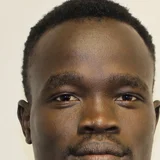
Last week, I was traveling from Kampala to Juba. And you know me — I believe time bends for me until it doesn't — so I got to Namayiba pretty late. By the time I arrived, only Gold-Line coaches still had a seat left. Now, you know how Namayiba can be: the noise, the confusion, the brokers fighting. Sometimes you even feel a dead man could rise and say, "Can you humans keep it low there? Some people are trying to rest in peace."
And of course, because I'm South Sudanese, the drama followed me. Some Sudanese women got into a heated argument with the conductor, which escalated to the driver. One woman even moved from the back to the front intending to beat the driver. Then the driver, a Ugandan who, if I'm not mistaken, had driven the Juba route long enough to pick up our temper, went all crazy, almost going for the head of the woman who came for him. I hate gossiping, but let me tell you, the air was thick with Arabic threats and testosterone.
You know how they keep linking gods to Greece? Perhaps the god of war was a bastard child from the Sudan, born somewhere along the Nile between Khartoum and Juba. The shouting alone could start a civil war. Imagine — a petty argument over luggage attracted a police convoy to settle it and finally set our bus in motion.
By the time we settled our differences and finally left, it was midnight. We reached Elegu at around 8 a.m., looking like survivors of a failed Nairobi peace negotiation.
While heading for the document verification queue at immigration, a young woman approached me, speaking in a language I didn't grasp. She was beautiful — the kind of beautiful that confuses your brain before your heart catches up. She had this scent that created need and want, and intelligent eyes that told of a mind shaped by books and wise people. Her gaze had that rare softness.
Slowly and softly, as if afraid to hurt words, she asked me something. In return, I smiled one of my signature "I-am-the-man-you've-been-looking-for" smiles and responded in Arabic, "Pardon me, I didn't pick that. Could you come again?" Realizing I may not be as multilingual as my enticing beards suggest, she quickly switched to Arabic and asked, "Are you Nuer?"
I said, "Not really, no."
My response, kind and gentle as I'd intended, instead purged her excitement like a knife. Her joy shrank; she nodded, said nothing more, and walked away.
As I handed my passport and yellow fever card to the immigration officer — who was clearly memorizing my passport number and praying it might coincidentally be my WhatsApp number — I gave her my usual "sorry-ma'am-you're-not-my-type" wink as I walked through the gate. But I kept thinking about that woman, her voice, her excitement at first, the disappointment when I said no. There was hesitation in her tone. I could feel she was hiding something.
Part of me wondered if she was simply relieved to see a familiar face, or if she was drawn to that version of me that only appears when I travel. Please don't say I brag a lot, but you know there's a side of me rarely talked about. I have this confident traveler mode, I call it my 10/10. I'm at my most handsome when crossing borders; I even give female migration officers sleepless nights. Maybe I should stop traveling for the sake of world peace.
Anyway, I cleared with immigration and finally headed out, only to meet my lady once again. This time, she was there all by herself, her face still beautiful but clouded with thought. Curiously, I asked where she was coming from. She said she'd traveled from Bweyale to Juba, but her bus had left her behind because of immigration delays. I was right, but I noticed another pattern. She had that look — the "I'll figure it out" look people wear when they have no plan B.
Here's the thing: I didn't want to make her uneasy by asking if she had fare for another ticket. Instead, I just said gently, "Come with me. Our bus still has space."
She hesitated — like women do. "Wtf is wrong with y'all?" She shrugged, perhaps because she was unsure whether to trust this stranger — or perhaps because she's well-versed in the quote "Looks are deceiving," and this gent was dangerously handsome. I looked like some NGO was funding a project on my looks. I'm not one to give up easily, so I nudged her reassuringly until she agreed.
I talked to the conductor, who charged her far less than usual. I quietly paid it.
After she noticed this small kindness, she gave me that same look again, the one that stopped me earlier, and said, "I'm coming." A short while later, she returned carrying drinks and rolex; a simple, heartfelt gesture of gratitude.
I don't usually eat while traveling, as motion sickness can quickly undo me, but in that moment, refusing her kindness would have been almost cruel. So I accepted, not for the food itself, but for what it symbolized: gratitude, trust, and the fragile beauty of human connection beyond tribe and circumstance.
Our seats were slightly far apart, so we never got to chat. When I alighted in Juba, we said our goodbyes and went our separate ways. She's the kind of lady I wouldn't normally let go without asking for her number, but I have this principle: if I help someone, I don't ask for their number. I don't want gratitude mistaken for romance. Some things should remain pure.
But as I walked away, I couldn't stop thinking about her question, "Are you Nuer?"
This encounter revealed the tragedy of South Sudanese politics. Politics have conditioned us to view ourselves through the lens of ethnicity. We have been explicitly and implicitly taught that other tribes are our enemies. And innately, this makes us feel that goodwill from "the other" is suspect.
But the falsity of this myth is shown by how the poor and ordinary, those who travel by bus, eat street food, trade petty stocks, and toil for a living, understand cooperation. The elites who work for political gain understand that this unity among the ordinary is a threat to them. So they dine among themselves and plot how to divide the people, ensuring we focus on ethnicity rather than cleansing the country of bad politics.
The truth is, I — and many others — believe in humanity. If I have enough, I will help you; not because you are Dinka or Nuer, Bari or Acholi, but because you are a fellow traveler in this uncertain journey of life.
Government halls or peace conferences will never unite this nation. Our small acts of solidarity, the ones that remind us we are, first and foremost, human before we are tribal, will.
© John Garang
More from the shelf
The Long Walk to the Library
Last week, I came across a story online about the Kenya National Library Service (KNLS) – Nakuru Branch, and I just don't know why anyone would think I'm showing…
Rakuba Writers and the Pamphleteers in the Cellar
Cultural etiquette and the illusion of the silent obedient patriot have long been used since medieval times as tools of containment.
Life Loves the Jolly Ones
I am not the oldest person alive, but in the short yet long span of life I have led, I have always noticed how jolly people keep attracting good things into their…