
How Liquid Death Redefines the Cultural Meaning of Water

Introduction
Since time immemorial, water has been treated as the source of life. In kindergarten, we learned that water is life. It is seen as one of the most ordinary products of daily life. Literally, no one gives water much thought until it runs out. In conventional advertising, water is associated with purity, health, nature, and wellbeing. Brands utilize images of water through fountains, clear streams, blue colors, and attractive bottles to communicate pro-life ideals. Liquid Death, however, took a different approach, and that is the interesting part of its marketing strategy.
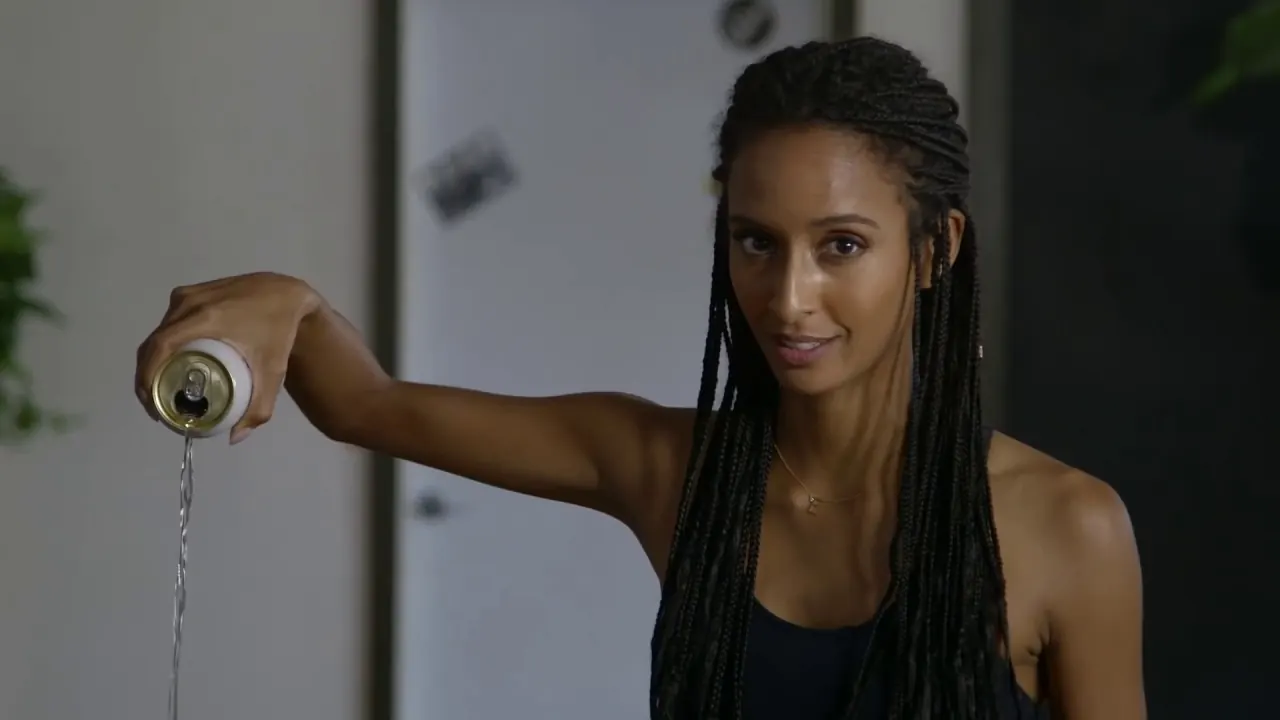
Released on 21 January 2019, “Liquid Death - Deadliest Stuff on Earth?” contrasts with conventional advertising campaigns by presenting itself as a dangerous product. The advertisement opens with a professional actress who captures the audience's attention by presenting herself as a paid actress speaking directly to the camera. She challenges conventional marketing for presenting water as a feminine and gentle drink associated with yoga and wellness. Leveraging imagery through short b-rolls of potentially life threatening leisure water activities including surfing, snowboarding and kayaking, she argues that water causes a significant number of deaths annually, then compares it to 1-2 deaths caused by Liquid Death. At the end of the advert, the camera reveals she has been waterboarding a man all the while. The advertisement concludes with the statement: "Made from the deadliest stuff on Earth. Please enjoy it responsibly."
Rather than opting for conventional advertising of associating water with life, Liquid Death deliberately opts to challenge the cultural codes attached to it. This strategy can be explained through Jonathan E. Schroeder's concept of brand culture in his 2009 article “The Cultural Codes of Branding.” Schroeder proposes that brands are cultural objects and their meanings are not simply what appears on screen but rather a combination of meanings shaped by history, images, myths and shared social references.
This analysis is centred on two connected strategies: the cultural redefinition of water and the use of visual irony and cultural references to construct a rebellious brand identity. It also brings into debate the ideological implications of this approach.
The questionHow does Liquid Death use cultural and visual codes to turn an ordinary household product into a symbol of danger and rebellion, and what contradictions emerge from this strategy?
1. Redefining the cultural meaning of water
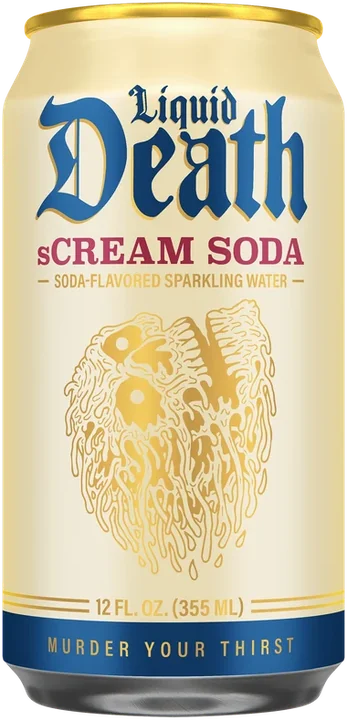
The first strategy used by Liquid Death is the reversal of conventional meaning of water. Liquid Death challenged this popular connotation that presents water as life, purity, cleanliness and physical wellbeing. Its name, Liquid Death, almost immediately challenges the narrative, followed by the rather vulgar language used, to the overall brand identity. Another particularly standout expression is referring to "Water is not yoga. Water is Liquid Death." This shifts focus from its denotation as an ordinary drink representing calmness and connotes it into something different associated with danger, death and aggression. The opposition to the denotation is further expressed through the actress's criticism of the cute brand names and small delicate bottles. The brand challenges the visual language of the bottled water industry. Contrary to popular trends, it is packaged in a black, tall can, with skull imagery which is distinctively associated with heavy metal culture and energy drinks.
These references are examples of cultural coding. Primarily, neither the skull, dark aesthetics, nor the aggressive language are icons or symbols of rebellion, but because of the cultural associations that the audience already attached to them, it completely presents the advertisement’s intent. Schroeder’s concept explains this strategy reinforcing that brands use cultural codes to create meaning beyond the immediate physical characteristics of their products. Liquid Death creates a symbolic universe around an ordinary product by selling an identity already associated with people who reject conventional wellness culture and prefer a more rebellious form of self-expression.
2. Visual rhetoric, irony and the construction of danger
The second strategy is the role of visual rhetoric. The advertisement complements the spoken argument with visual construction. The opening is a great example of this. The actress presents herself as a paid professional actor with the camera presenting a familiar format of a commercial spokesperson. The onset resembles a conventional product advertisement until it begins to get absurd as the content of her speech is delivered. The most important iconic code is when the camera reveals the man being waterboarded. This rather unexpected image changes the interpretation of everything that had come before it. Initially the actress’s speech seemed like exaggerated advertising language, before the final image provides a visual illustration of her argument. This relation can be narrowed down and explained through the plane of expression and the plane of content. The actress, the water, the restrained man and the camera framing constitute elements of the plane of expression. Their combination produces the plane of content: water is presented as a dangerous and powerful substance.
Georges Roque's argument in “What Is Visual in Visual Argumentation?” can be applied here. Visual arguments should not be reduced to verbal explanations because the way an argument is displayed visually is itself significant. The waterboarding does not try to support the spoken messages, instead it completes the joke and makes the central argument memorable. The advertisement deploys various rhetorical appeals, for example the exaggerated claims capture humor, and surprise; ideal to invoke pathos. The way the actress presents herself imitates the credibility of a professional spokesperson, while the line that she is being paid points to some degree of self-awareness. The comparison of the annual fatalities of water and energy drinks presents the logos of the argument, by invoking factual reasoning to support a conclusion that is rather absurd. All this brings an advertisement where verbal and visual elements work together to challenge conventional product advertising.
3. Cultural references, audience and the irony of responsibility
The final strategy deployed is the use of familiar cultural references to establish a relationship with a particular audience. The brand presents itself at crossroads; as something parents might hate but children might love. Here Liquid Death presents itself as an object of rebellion and forbidden experiences. Its references to heavy metal, gothic typography, punk aesthetics, and horror imagery help establish this identity. The closing statement, "Please enjoy responsibly", works effectively. This is a common expression used in alcoholic beverages advertisements, to warn about responsible consumption. This strategy of applying it to water creates an impression of risk, which centralizes it with the rebellious aspect mentioned above. And of course it is also humorous because water is not normally considered hazardous to associate it with such a warning. This is an example of interdiscursivity. The advertisement borrows familiar expressions from one advertising sphere and places it in another. The audience being familiar with the original convention, also immediately connects the irony in this new context.
This was a genius marketing strategy that transformed a plain commodity into a $1.4 billion company with revenue growing from $3 million in 2019 to over $330 million. However it raises a critical question about the cultural values that are being promoted. The advertisement rejects the feminine representation of water by describing it as a girly drink for yoga moms. It frames those cultural associations as weak, and rather opts for a masculine identity of aggression and rebellion reinforcing gender stereotypes. In an attempt to challenge established conventions in the bottled water industry, it escapes one cultural stereotype and introduces another, making a cycle of familiar assumptions about gender and identity.
This perspective aligns with Schroeder's argument that brand meanings are not entirely controlled by producers. While their intent might have been to use satire whether to challenge narratives or promote their product the final interpretation lies with the audience who might see it through different perspectives. While others might see it as funny and original, others might find its gendered language exclusionary.
Conclusion
Liquid Death's Deadliest Stuff on Earth? shows how cultural coding can transform an ordinary product into something entirely different without necessarily touching the product itself. Through the reversal of conventional water associations, introducing rebellious connotations, and combining verbal and visual rhetoric, the brand creates a whole new distinctive identity around mountain water. The waterboarding reveal and the final statement, "Please enjoy responsibly", are central to this strategy, showing how cultural branding can change a product without necessarily changing the product.
The campaign illustrates Schroeder's argument that brands are cultural objects whose meanings extend beyond their physical products, however it also reveals the underlying challenge: while cultural branding can be deployed to counter cultural conventions, it does not necessarily mean escaping them. The success of the campaign can partly be attributed to existing cultural stereotypes, which raises questions about the relationship between originality, cultural representation and ideology.
Written by John Ngor Deng Garang as a midterm essay. Liquid Death and its advert belong to Liquid Death; images are used here for commentary and analysis.